


Tracing Letters for Heritage Language Kids: 2026 Guide
Tracing letters in a heritage language is the most direct way to build early literacy and cultural identity at the same time. For children aged 3 to 6, the physical act of tracing connects hand movement, letter recognition, and sound into one powerful learning moment. This guide covers the best age to start, the tools that work, and step-by-step methods you can use at home today. Whether your child is learning Punjabi, Hindi, Arabic, or another script, tracing letters in their native language gives them a foundation that lasts a lifetime.
Why ages 3 to 6 are ideal for tracing letters in a heritage language
Educational experts recommend ages 3–6 as the prime window for introducing letter tracing. During these years, children develop the fine motor skills and muscle memory that handwriting in any language requires. Starting early means the hand and brain learn together, before habits from a dominant language take over.
This window also aligns with a critical period for bilingual literacy. Children who begin tracing heritage language letters before age 6 build stronger connections between the script’s visual shapes and their spoken sounds. That connection is harder to form later, once the dominant language script becomes the default.
Heritage languages with unique alphabets, such as Punjabi’s Gurmukhi or Hindi’s Devanagari, benefit most from early exposure. These scripts have letter forms that look nothing like the Latin alphabet. The earlier a child traces them, the more natural those shapes feel.
Key reasons to start tracing between ages 3 and 6:
- Fine motor control is actively developing, making tracing physically achievable and rewarding.
- Hand-eye coordination improves rapidly during this stage, supporting accurate letter formation.
- Children at this age absorb new scripts without the interference of already-learned writing habits.
- Tracing builds writing muscle memory through repetition, which is most effective when started young.
- Emotional attachment to the heritage language is strongest when learning begins in early childhood.
Pro Tip: Start with just two or three letters per week. Mastering a small set builds confidence faster than rushing through an entire alphabet.
What tools and resources work best for heritage language tracing
Free printable tracing worksheets are widely available as downloadable PDFs for many heritage scripts, including Arabic, Hindi, and Urdu. These worksheets often include coloring activities alongside letter tracing, which keeps young children engaged longer. Cost is not a barrier for most families.
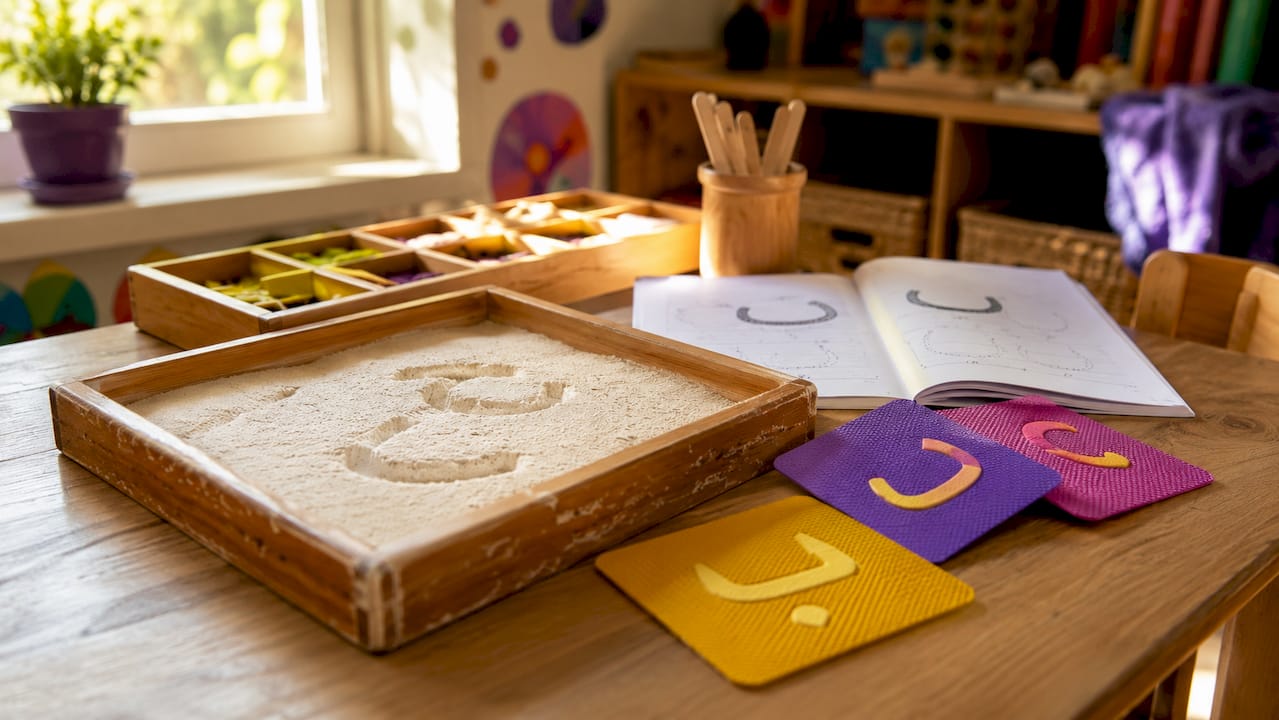
Multisensory tracing tools such as Montessori tracing boards, sand trays, and textured letter cards outperform static worksheets alone. They engage touch, sight, and sound together. That combination accelerates muscle memory and spatial awareness before a child ever picks up a pencil.
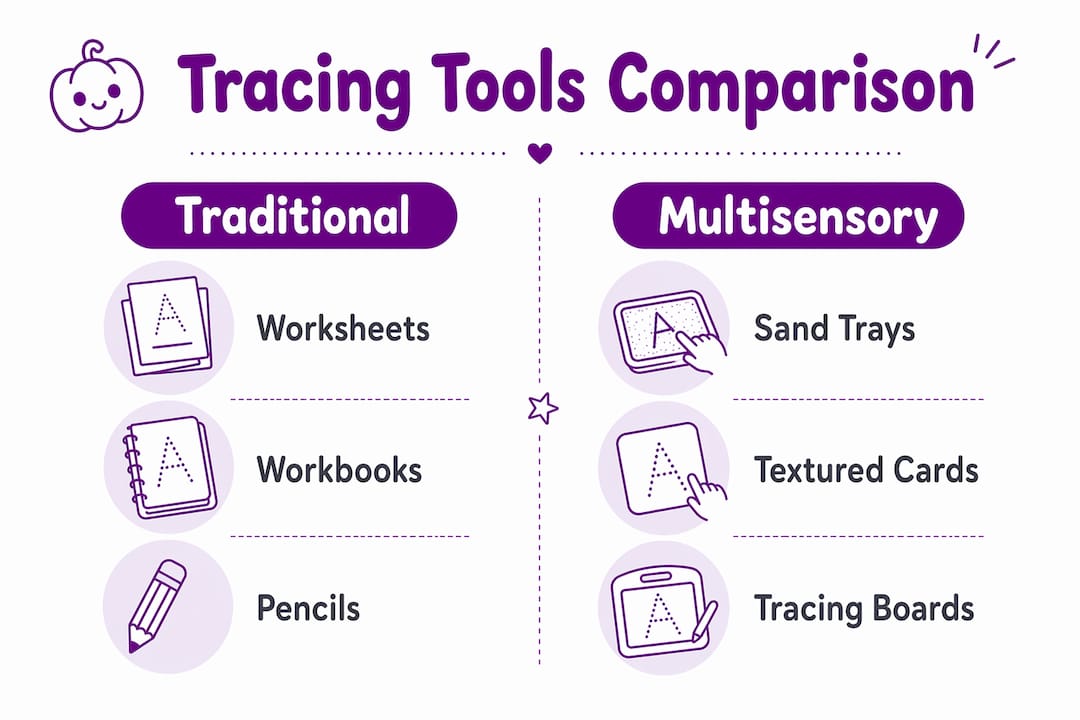
Digital apps and videos can supplement tracing practice effectively. They work best as a warm-up or reward, not as the primary method. Screen-based tools lack the tactile feedback that physical tracing provides.
| Tool type | Key benefit | Best age range |
|---|---|---|
| Printable worksheets | Free, portable, covers most scripts | 4–6 years |
| Montessori tracing boards | Builds tactile memory before pencil use | 3–5 years |
| Sand trays | Low-pressure, easy to reset, sensory-rich | 3–4 years |
| Magic ink reusable books | Reusable, mess-free, keeps practice fun | 3–6 years |
| Digital tracing apps | Visual reinforcement, interactive feedback | 4–6 years |
Selecting the right tool depends on the script’s complexity. Scripts with many strokes per letter, like Devanagari or Gurmukhi, benefit from tactile tools first. Simpler scripts can move to pencil-based worksheets sooner.
Pro Tip: Pair a sand tray with spoken letter sounds. Ask your child to say the letter name out loud while tracing it with their finger. This links motor action, sound, and shape in one step.
For a deeper look at how different tools compare, the magic ink vs. traditional workbooks breakdown from Littlepumpkins is worth reading before you buy anything.
How to teach heritage language letter tracing step by step
A structured approach prevents frustration and builds real skill. A 1-week plan with daily 15–20 minute sessions effectively introduces new alphabet characters to young learners. Alternating between letter recognition, finger tracing, and pencil formation prevents fatigue and supports retention.
Follow these steps in order:
- Start with finger tracing on a tactile surface. Use a sand tray or a textured letter card. This builds spatial awareness without the pressure of holding a pencil correctly.
- Introduce the letter sound aloud. Saying the letter name while tracing creates strong neural pathways that link the written symbol to its sound. Do this every single time.
- Move to pencil or stylus tracing on worksheets. Use dotted or dashed letter outlines. Keep the lines large enough for small hands to follow comfortably.
- Introduce letter variations for complex scripts. For Arabic and Urdu, teach isolated letter forms before connected writing. Positional forms (beginning, middle, end of a word) come after the child is confident with the isolated shape.
- Repeat across short daily sessions. Keep each session to 15–20 minutes. End before your child loses interest, not after.
- Celebrate each letter mastered. A sticker chart, a high-five, or letting your child “teach” the letter to a stuffed animal all work well.
| Stage | Activity | Duration |
|---|---|---|
| Week 1 | Finger tracing on sand or textured surface | 10 minutes daily |
| Week 2 | Pencil tracing on large dotted worksheets | 15 minutes daily |
| Week 3 | Tracing with letter sound spoken aloud | 15–20 minutes daily |
| Week 4 | Review all letters, introduce simple combinations | 20 minutes daily |
Pro Tip: If your child resists pencil tracing, go back to finger tracing for another week. Rushing to pencil too early creates frustration, not progress.
How to embed tracing in everyday heritage language activities
Heritage language tracing activities succeed when they are woven into daily life rather than treated as homework. Children connect more deeply with a language when it appears during meals, bedtime stories, and family rituals. Tracing a letter on a napkin during dinner feels playful. Sitting down to a formal worksheet after school feels like a chore.
Practical ways to make tracing part of your daily routine:
- Trace letters on a whiteboard while cooking together and name the foods in the heritage language.
- Use a bilingual storybook and ask your child to trace the first letter of each page before you read it.
- Play a scavenger hunt where your child finds objects around the house that start with the letter they are learning.
- Let your child trace letters on your back with their finger and guess what you wrote.
- Celebrate cultural holidays by tracing letters connected to that event, such as festival names or greetings.
Overemphasizing volume or speed leads to language fatigue and loss of interest. Experts recommend short, playful sessions that prioritize cultural connection over perfect handwriting. The goal at ages 3 to 6 is love of the language, not calligraphy.
Bilingual media also supports tracing practice. Watching a short video in the heritage language before a tracing session primes the child’s ear and builds vocabulary alongside letter recognition.
Common challenges with heritage script tracing and how to fix them
Complex letter forms are the most common source of frustration. Scripts like Arabic, Urdu, and Devanagari have strokes that feel unfamiliar to small hands. The fix is to break each letter into individual strokes and practice one stroke at a time before combining them.
Heritage learners often need safe, playful environments to practice writing and speaking. Language shyness is real. A child who feels judged for making mistakes will stop trying. Keep corrections gentle and frame every attempt as a win.
Common challenges and solutions:
- Complex letter forms: Break each letter into numbered strokes. Trace one stroke per session before combining.
- Language shyness: Use games and play instead of formal practice. Never correct in front of others.
- Dominant language interference: Keep heritage language tracing in a separate, special context. A dedicated notebook or book helps signal “this is our language time.”
- Short attention spans: Switch between finger tracing, pencil tracing, and verbal activities within a single session to maintain focus.
- Inconsistent practice: Attach tracing to an existing habit, like brushing teeth or a bedtime story, so it happens automatically.
Pro Tip: Watch for signs of language fatigue: sighing, rushing through letters, or refusing to start. These are signals to shorten the session or switch to a purely oral activity that day.
Key takeaways
Tracing letters in a heritage language works best when it starts between ages 3 and 6, uses multisensory tools, and is woven into daily cultural routines rather than treated as formal homework.
| Point | Details |
|---|---|
| Start between ages 3 and 6 | This window builds fine motor skills and script familiarity before dominant language habits set in. |
| Use multisensory tools first | Sand trays and tracing boards build muscle memory faster than pencil worksheets alone. |
| Say the letter sound aloud | Speaking the sound while tracing links the symbol, sound, and movement into one strong memory. |
| Keep sessions short | Daily sessions of 15–20 minutes prevent fatigue and keep the experience positive. |
| Embed tracing in daily life | Tracing during meals, stories, and cultural rituals builds emotional connection to the language. |
Why I think most parents start tracing the wrong way
Most parents I talk to begin heritage language tracing with a worksheet and a pencil. That is the wrong starting point for a 3-year-old. The hand is not ready, the script feels foreign, and the whole thing turns into a battle within ten minutes.
What actually works is starting with the body. Finger tracing in sand, tracing on a parent’s palm, tracing giant letters on a chalkboard outside. These activities feel like play. The child does not know they are learning. That is exactly the point.
The other mistake I see is treating heritage language tracing as a separate subject. It is not. It is a thread that runs through everything: the food you cook, the songs you sing, the stories you tell. When a child traces the first letter of their grandmother’s name before a video call, that letter means something. A worksheet never will.
Cultural pride is the real engine here. Children who feel proud of their heritage language practice it willingly. Children who feel it is a burden avoid it. Your job as a parent is not to be a teacher. It is to make the language feel like home.
— Bobby
Discover Littlepumpkins’ tracing books for heritage language learners
Littlepumpkins creates reusable magic ink tracing books designed specifically for children aged 3 to 6 learning scripts like Hindi and Punjabi. The magic ink technology means your child can trace the same letters again and again without wasting paper or ink.
Each book pairs engaging illustrations with progressive letter formation practice, so children build skill without losing interest. Parents who have used Littlepumpkins books report that their children ask to practice, rather than resist it. That shift in attitude is the real result. Explore the full range of tracing and handwriting books to find the right fit for your child’s heritage language. For Hindi learners specifically, the Hindi magic tracing book is a great place to start.
FAQ
What age should kids start tracing heritage language letters?
Ages 3 to 6 are the recommended window for starting letter tracing. Fine motor skills and script familiarity develop fastest during these years.
How long should each tracing session be?
Keep sessions to 15–20 minutes per day. Alternating between finger tracing, pencil tracing, and letter sounds within that window prevents fatigue and improves retention.
Do complex scripts like Arabic or Urdu need a different approach?
Yes. For scripts with positional letter variations, teach isolated letter forms first before introducing joined or connected writing. This reduces frustration and builds a solid foundation.
Are free tracing worksheets good enough for heritage scripts?
Free printable worksheets work well as a starting point. Pairing them with tactile tools like sand trays or Littlepumpkins’ reusable tracing books produces better results than worksheets alone.
How do I keep my child motivated to practice heritage language tracing?
Embed tracing in daily routines and cultural moments rather than scheduling it as formal practice. Short, playful sessions tied to meals, stories, or family traditions sustain motivation far longer than homework-style drills.